Who won Richmond Park back for the public?
In 1751 a princess shut the gates of Richmond Park to anyone without a ticket. Seven years later a Richmond brewer stood at Sheen Gate, got himself pushed, and took the gatekeeper to court. Every group we set down at that gate walks in on the judgment he won.
Richmond Park was never public land to begin with. In 1637 Charles I completed the enclosure of it as his new hunting ground, walling in eight miles of ground that had belonged principally to the parishes of Ham, Mortlake, Petersham, Roehampton, Kingston, Richmond and Putney. It was deeply unpopular, and Charles made a concession that mattered far more than he can have imagined: he allowed people to cross the park, and let some common rights continue. That held for roughly a century.
How the gates closed
It came apart under the Walpoles. In 1727 George II gave the Rangership to Robert Walpole, son of the prime minister — though in practice Sir Robert took the decisions. Wanting privacy, he built keepers’ lodges at the gates and removed the ladder stiles, arguing that gates and keepers made them redundant. Keepers were told to admit “respectable persons” in the daytime, and carriages holding tickets. Ordinary people were neither respectable nor in a carriage.
In 1751 Princess Amelia, second daughter of George II, became Ranger and finished the job. She simply closed the gates to everyone except carriages with a ticket, and issued the tickets to her friends. When Lord Brooke of Petersham asked for one, the reply was that she had refused the Lord Chancellor. On Ascension Day that same year — 16 May 1751 — the traditional Beating of the Parish Bounds party was refused entry, and got in only “with difficulty”, through a breach in the wall near Sheen Common.
Petitions failed. So, expensively, did the law: in November 1754 Symonds v Shaw was heard before the Lord Chief Justice, funded by £1,095 subscribed by the inhabitants of East Sheen, with twenty-seven witnesses for the prosecution and thirty-seven for the defence. It was dismissed.
One man, one gate, 1755
John Lewis (1713–1792) owned a brewery near the Thames, close to where Terrace Gardens are now. He had watched the 1754 disaster and drew the lesson: claim less, and claim it precisely. In 1755 he took a friend to Sheen Gate and waited for a carriage. When the gatekeeper, Martha Gray, let the ticketed carriage through, Lewis tried to walk in behind it. Gilbert Wakefield wrote the exchange down, and it is four lines long: Where is your ticket? What occasion for a ticket? Anyone may pass through here. No — not without a ticket. Yes, they may; and I will.
She pushed him. He let the gate be shut against him. On that forcible denial he obtained an indictment, and Rex v Gray was born. The named defendant was a gatekeeper. The real one was a princess.
It nearly came apart. At the summer assizes in August 1757 the defence produced an anonymous pamphlet attacking Amelia. Lord Mansfield ruled it a libel and a contempt, halted the trial and ordered the writers found. Lewis swore an affidavit at Guildford on 13 August 1757 denying that he had printed, published or distributed it — while saying nothing about who had written it. Mansfield noticed, remarking that the manner of the denial rather supported the allegation, and let the case proceed anyway.
3 April 1758
The case resumed at the Surrey Assizes at Kingston, before Sir Thomas Denison, Sir Michael Foster and a jury. Lewis confined his claim to pedestrian access and nothing else, so it was not buried under evidence the way 1754 had been. Judgment was given for him that day.
The court then asked what he wanted: a gate in the wall, or a step-ladder over it. He chose ladder stiles — a door would have to be kept shut to stop the deer escaping, which would make access look like a favour, and one day somebody would fit a bolt to it. On 12 May 1758 ladder stiles and gates were fixed at Sheen Gate and Ham Gate. On 16 May “a vast concourse of people from all the neighbouring villages climbed over the ladder stiles into the Park” — seven years to the day, by coincidence, after the Ascension Day humiliation.
He went back once more, to complain that the steps were set too far apart for children and old men to climb. Mr Justice Foster’s reply is the best sentence in the story: “I have observed it myself; and I desire, Mr Lewis, that you would see it so constructed that not only children and old men, but old women too, may be able to get up.”
What it cost him
It ruined him. The case was a heavy financial burden, his brewery flooded, and his livelihood was gone. Thomas Wakefield organised a collection that bought him a small annuity, and another was being raised when he died on 22 October 1792, aged 79. He is buried at St Mary Magdalene, the parish church of Richmond, under a horizontal stone outside the south side.
Be honest about the size of what he won. Lewis recovered a pedestrian right of way — the confirmation of rights that already existed on paper, not the right to roam, which was another century off. But he established the principle of public access where better-funded attempts had failed, and he did it by asking for one small thing he could prove instead of everything he wanted.
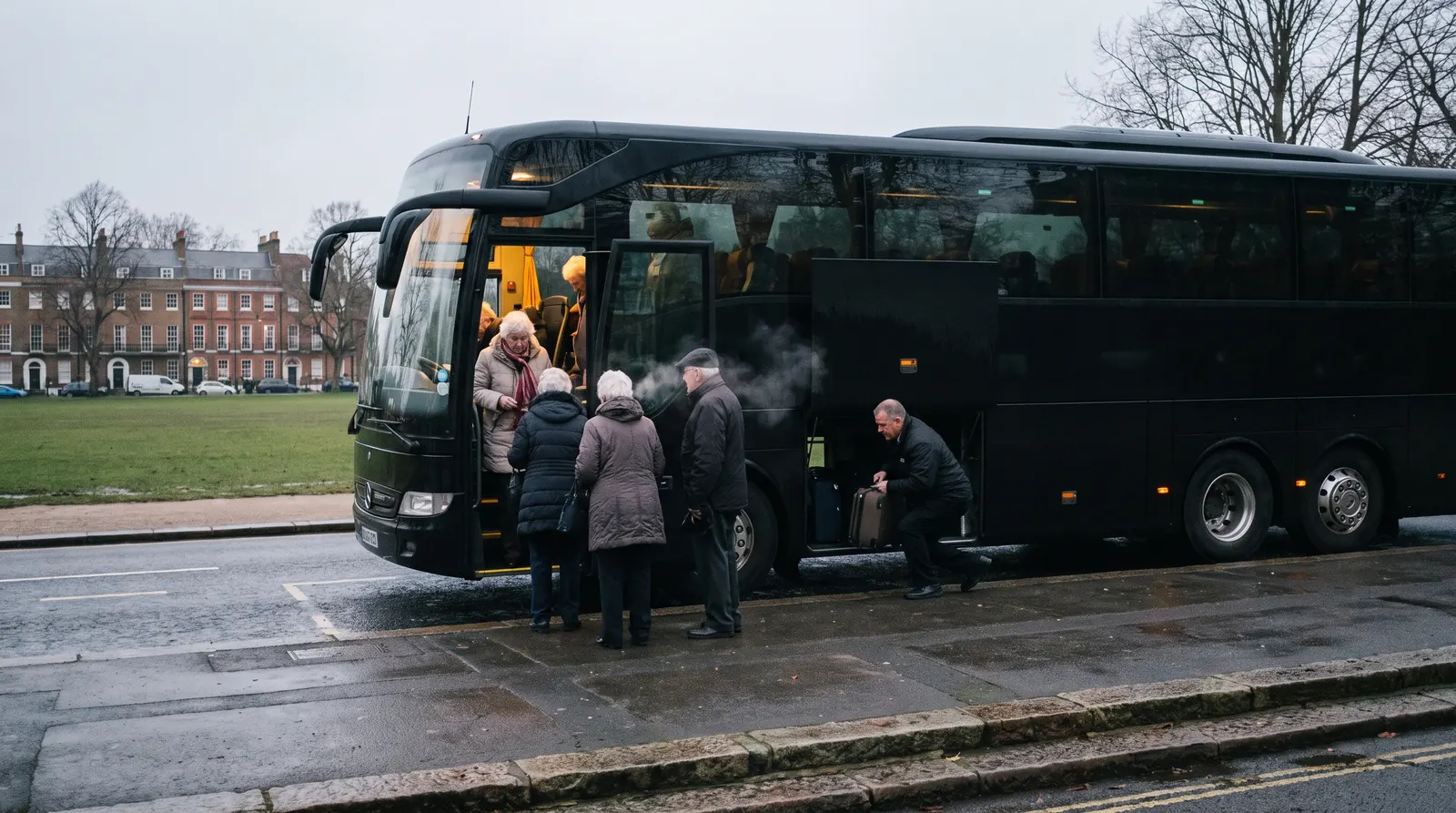
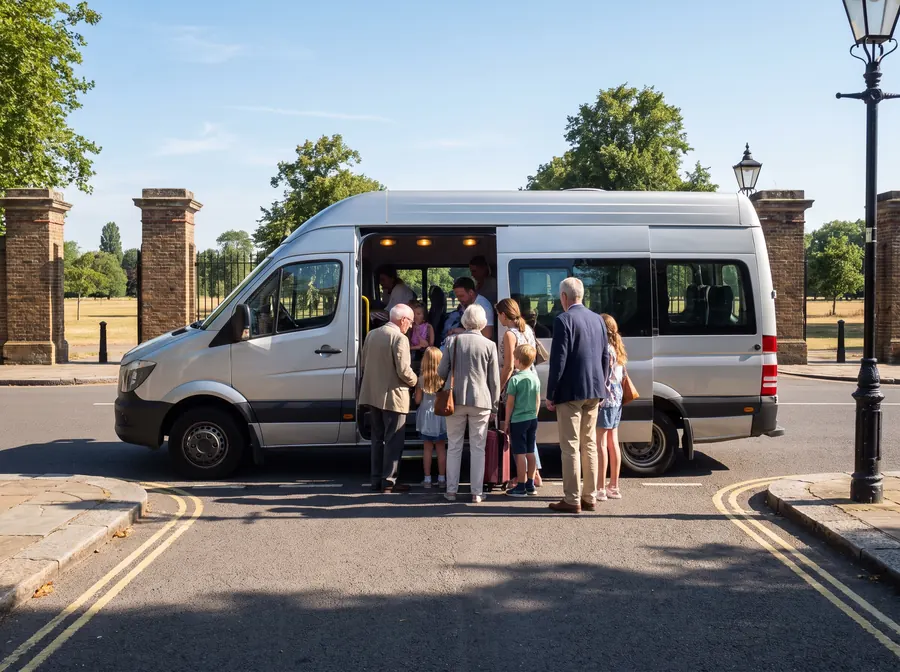
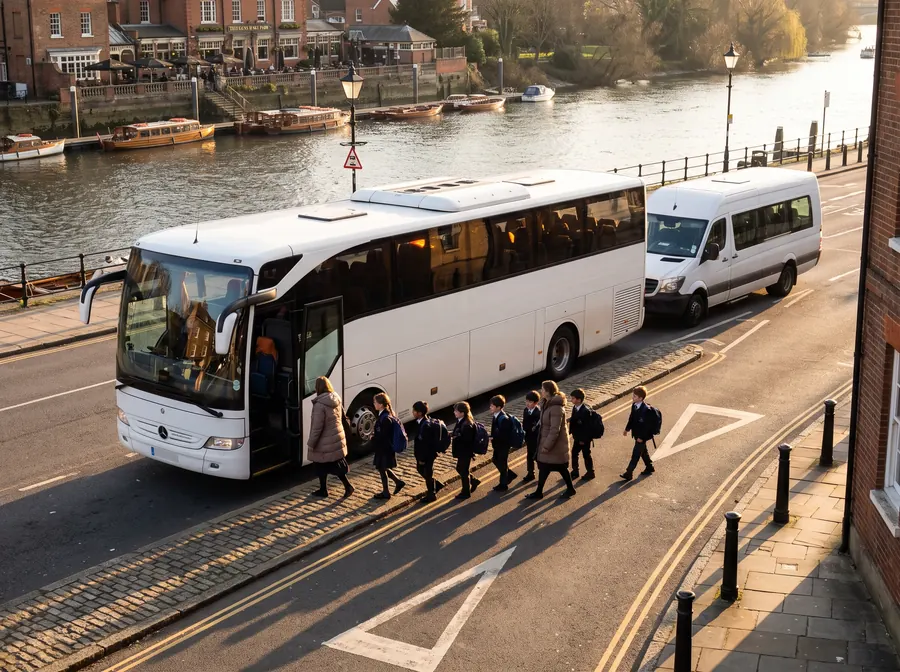
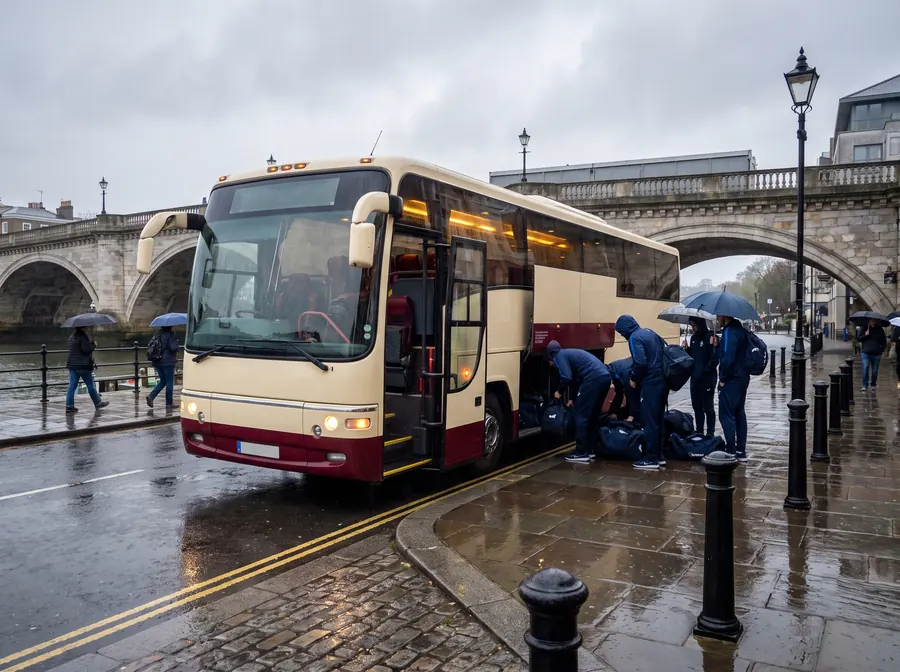
Sheen Gate and Ham Gate are two of the places our coaches set down. The group walks in on foot, exactly as the 1758 judgment provides.
Sources: Friends of Richmond Park, John Lewis’ re-establishment of pedestrian access to Richmond Park (frp.org.uk), which itself draws on Baxter Brown, Collenette, Fletcher Jones, Bell, Cloake and McDowall; and The Royal Parks. Checked 29 August 2026.